
PAINTING & SURFACE PREPARATION
Repainting Metal After Smoke Exposure: Before You Approve the Finish
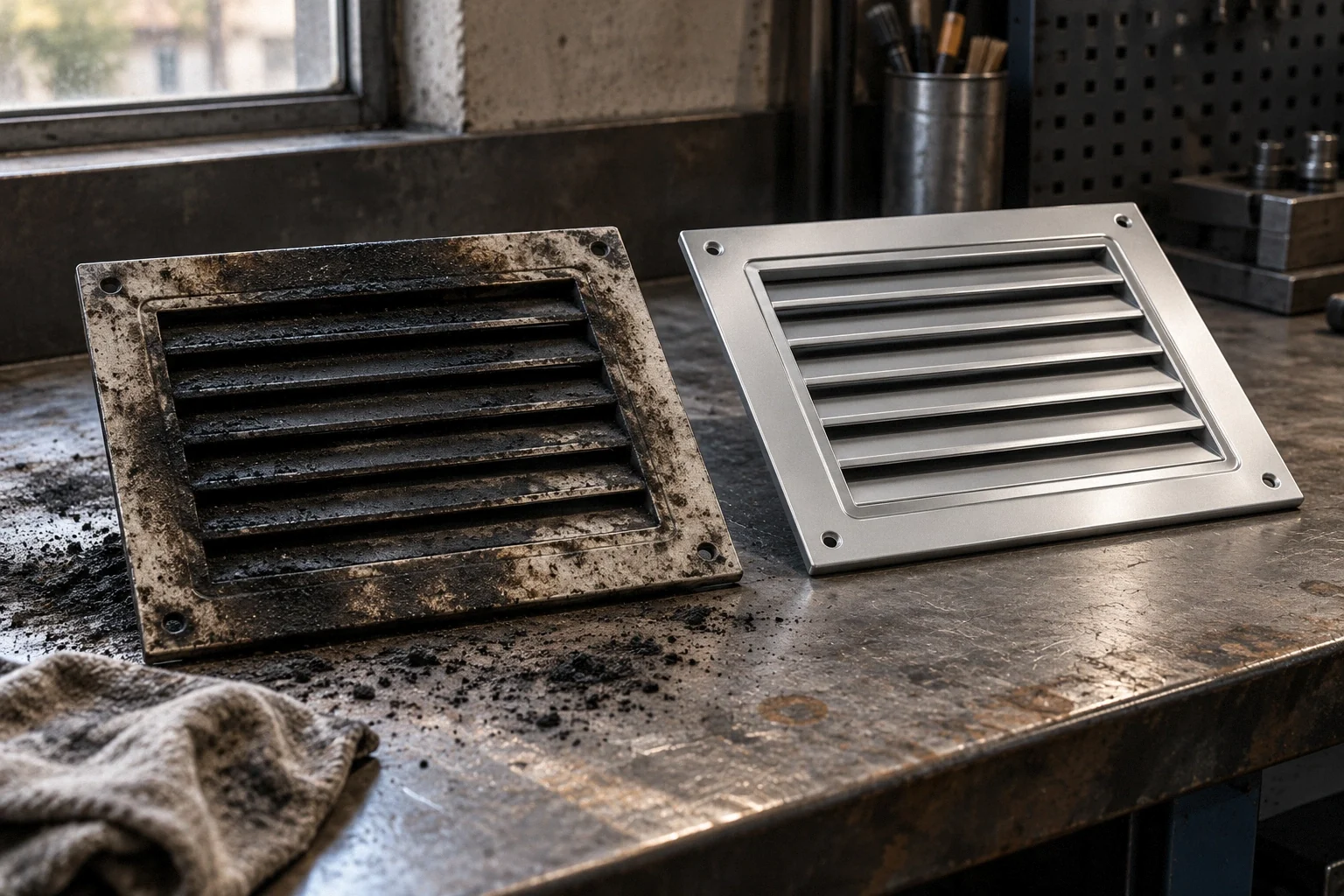
Before choosing a primer or color, establish what happened to the item, which surfaces need attention, and what the proposed finish will accomplish.
A painted metal cabinet or railing can become part of a larger cleanup after a fire. Its appearance is only one part of the decision. A refinishing proposal should identify the item and the work it needs; a building restoration plan should address the affected room and any unresolved smoke concerns.
This guide helps an owner review that scope. It does not determine whether a fire-exposed item is safe to reuse. The American Red Cross advises staying out of a fire-damaged home until local fire authorities permit re-entry.
Identify the item and its condition
Give the person preparing the estimate a description of the item, its location, photographs that can be obtained safely, and any available manufacturer or finish information. Record known exposure to heat, smoke, and firefighting water without guessing what occurred behind a surface.
Ask the estimator to identify the metal and existing coating, the condition they can inspect, and anything requiring a separate evaluation. For equipment or a functional building component, agree who assesses its operation before refinishing begins. A new finish is not an equipment inspection.
Make surface preparation a priced part of the work
“Prepare and paint” leaves too much open. Request the proposed cleaning method, which old coatings or corrosion will be removed, and how the surface will be prepared for the selected coating system. These choices depend on the item and product instructions.
Rust-Oleum’s industrial preparation guide distinguishes contaminant removal from abrasive cleaning and describes different preparation methods for different surfaces. It illustrates why one preparation method should not be assumed for every metal item. Its general guidance is not a fire-restoration specification; the contractor still needs current instructions for the actual products and an assessment of this job.
- Name the areas included: exterior faces, undersides, edges, interiors, and removable parts.
- Identify who handles disassembly, protection of adjacent surfaces, and reassembly.
- List the primer and finish products, preparation requirements, and planned application conditions.
- State how additional work will be documented if preparation exposes a different condition.
Resolve the smoke question before approving the finish
If an odor remains, identify who will investigate it and how that work relates to the painting scope. EPA’s indoor-air guidance emphasizes addressing pollution sources. A proposal to coat one object should explain its intended role in the larger cleanup.
For the building-wide questions, YKCA’s guide, Smoke Still Smells After Cleaning: What to Resolve Before Painting, explains how to record a persistent odor, review completed cleaning, and establish a checkpoint before finish work. It is a related restoration resource, rather than a product specification for metal refinishing.
Compare estimates using the same boundaries
Consider a hypothetical storage cabinet with painted steel doors and a separate interior lining. One estimate covers the outside faces; another includes removal and evaluation of the lining. The totals describe different work. Request a clear included-and-excluded list before treating the lower price as an equivalent offer.
The final written scope should identify the items, preparation, coating system, inspection before painting, and handoff after completion. Keep unresolved conditions visible in that record. This gives the owner and contractor a shared basis for deciding when the finish work can proceed.
Sources and reading notes
Sources reviewed October 23, 2026. Manufacturer guidance is general background; use the current instructions for the products actually specified.